






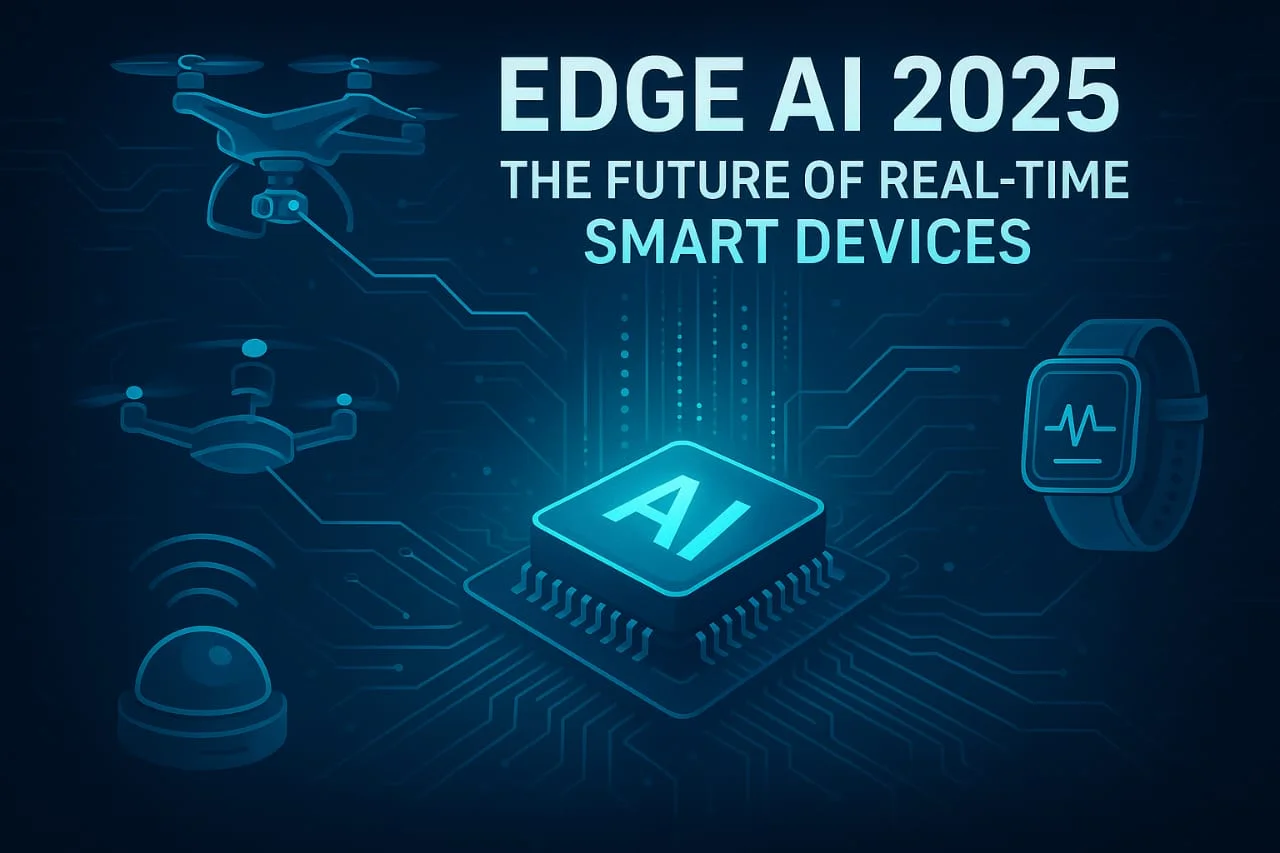
The landscape of technology is rapidly evolving, and Edge AI is at the forefront of this transformation. By bringing artificial intelligence processing closer to the device rather than relying entirely on cloud servers, Edge AI promises faster decision-making, reduced latency, and enhanced privacy. In 2025, smart devices powered by Edge AI are expected to redefine industries—from consumer electronics to healthcare, finance, and even online gaming platforms like Togelslot88 that integrate AI-driven personalization.
This article delves into the future of Edge AI, the smart devices it powers, and the potential implications for businesses and everyday users.
Understanding Edge AI
Edge AI refers to the deployment of artificial intelligence algorithms directly on devices rather than in centralized data centers. This decentralization offers several advantages:
-
Reduced Latency: Real-time data processing allows devices to respond instantly without relying on cloud connections.
-
Enhanced Privacy: Sensitive data can be processed locally, minimizing the risk of breaches during transmission.
-
Lower Bandwidth Consumption: Since less data is sent to the cloud, network load decreases.
-
Energy Efficiency: Optimized local processing reduces power usage compared to constant cloud computation.
Edge AI is not a replacement for cloud AI but a complementary approach that balances speed, efficiency, and security.
Edge AI Transforming Smart Devices
Smart devices, from smartphones to wearables and IoT systems, are becoming more intelligent thanks to Edge AI. By 2025, the following innovations are expected to dominate:
1. Consumer Electronics
Edge AI enables devices like smartphones, smart speakers, and home appliances to perform tasks without internet connectivity. Imagine a smart fridge that detects food spoilage in real-time or a smartphone that instantly analyzes photos and videos without cloud dependence.
2. Wearable Technology
Wearables such as fitness trackers and health monitors are leveraging Edge AI to provide personalized insights on heart rate, sleep patterns, and activity levels. With local processing, these devices can alert users to anomalies faster and more reliably.
3. Industrial IoT
In manufacturing, Edge AI empowers sensors and machines to make autonomous decisions. Predictive maintenance, real-time quality checks, and energy optimization are all possible without relying on centralized cloud systems.
4. Smart Vehicles
Autonomous cars and connected vehicles increasingly rely on Edge AI for navigation, object detection, and collision prevention. On-device intelligence reduces latency, a critical factor for vehicle safety.
Edge AI and the Online Gaming Industry
Interestingly, Edge AI is making waves even in sectors like online gaming. Platforms such as Togelslot88 are exploring AI-driven features to enhance user experience, including real-time game recommendations, adaptive difficulty levels, and personalized bonus offers. By processing data locally, these systems can react instantly to player behavior, providing a more engaging and seamless experience.
The integration of Edge AI into online gaming also addresses latency issues that could disrupt gameplay. For platforms operating in multiple countries, local AI processing ensures smoother interactions and reduces dependency on high-speed cloud networks.
Advantages for Businesses and Consumers
The adoption of Edge AI offers several tangible benefits:
-
Faster Decision-Making: Businesses can act immediately on critical data insights without cloud delays.
-
Improved User Experience: Devices respond instantly, creating a more interactive and satisfying experience.
-
Data Privacy Compliance: Local processing aligns with regulations like GDPR, giving users greater control over their personal information.
-
Cost Efficiency: Less reliance on cloud infrastructure translates into lower operational costs.
Consumers also benefit from more personalized and reliable devices. From smart home systems to online platforms like Togelslot88, Edge AI ensures that interactions are adaptive, secure, and responsive.
Challenges and Considerations
While Edge AI is promising, it comes with challenges:
-
Hardware Limitations: Running complex AI models locally requires high-performance processors and sufficient storage.
-
Energy Consumption: Despite optimization, intensive on-device computation can still strain battery life in portable devices.
-
Security Risks: Edge devices themselves must be protected against hacking, as data processing occurs locally.
-
Integration Complexity: Combining Edge AI with cloud-based systems requires careful architectural planning.
Addressing these challenges will be key to the widespread adoption of Edge AI-powered devices in 2025 and beyond.
The Future of Edge AI in 2025
By 2025, Edge AI is expected to become mainstream in both consumer and enterprise applications. Some predicted trends include:
-
Smarter Cities: Urban infrastructure powered by Edge AI can optimize traffic, energy, and public safety in real time.
-
Healthcare Revolution: Portable diagnostic tools with Edge AI can provide instant medical insights, especially in remote areas.
-
Enhanced Gaming Experiences: Online platforms like Togelslot88 may adopt AI-driven strategies to offer more immersive, low-latency experiences tailored to individual players.
-
Sustainable Technology: Edge AI systems reduce cloud dependency, lowering carbon footprints and energy usage.
The convergence of AI, IoT, and smart devices represents a transformative moment in technology, where real-time intelligence is available at the edge of networks rather than in distant data centers.
Edge AI is reshaping the landscape of smart devices in 2025. By bringing intelligence closer to the user, it offers faster, more secure, and highly personalized experiences. From wearable health monitors to autonomous vehicles and innovative online platforms like Togelslot88, Edge AI is enabling a smarter, more responsive, and connected world.
As technology continues to evolve, businesses and consumers alike must embrace Edge AI to unlock its full potential. With its ability to reduce latency, enhance privacy, and empower real-time decision-making, Edge AI is not just a future trend—it is the foundation of the next generation of smart devices.
Also Read: Milllennium Decorative Arts